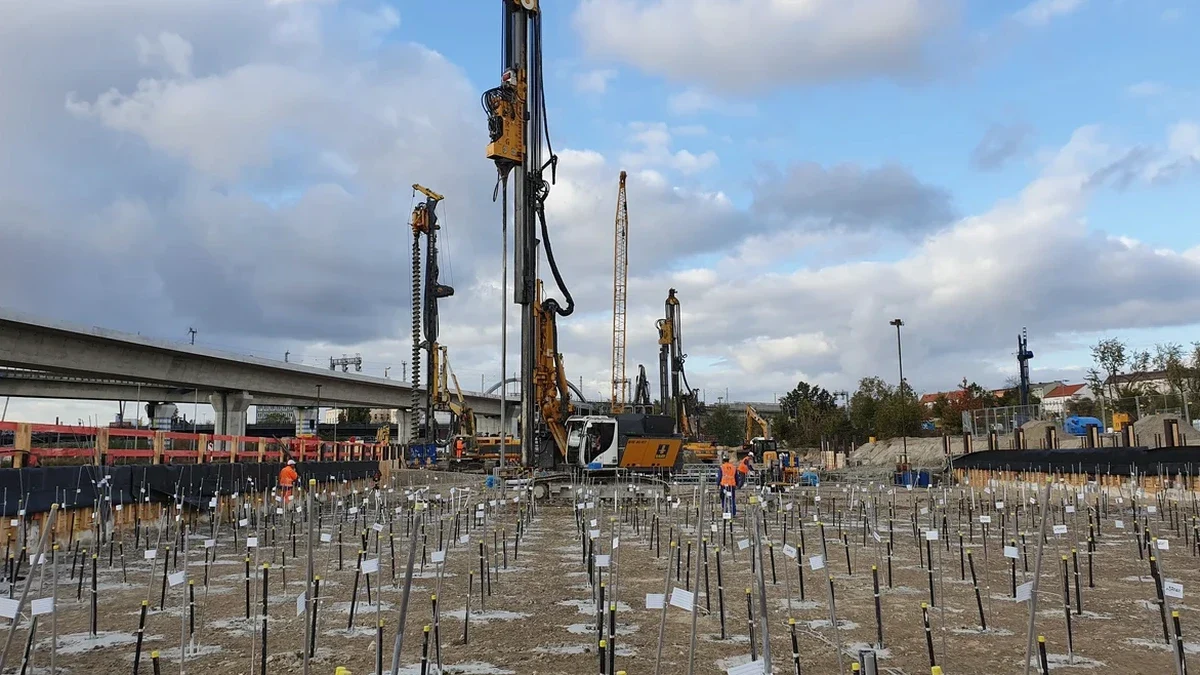
The ground conditions between Glasgow's West End and the East End can differ radically within a few hundred metres. A site near Kelvingrove Park might sit on stiff glacial till over sandstone, while a project in Dalmarnock could encounter old colliery backfill and alluvial silts. These contrasts define why grouting design in Glasgow cannot follow a generic template. The injection strategy, whether for permeation, compaction or jet grouting, must match the granularity and void structure of each stratum. Our team prepares section-by-section grouting plans based on borehole logs and in situ permeability data, then adjusts parameters during execution if the take rate diverges from the design model. For sites with complex layering, we often integrate the injection sequence with data from CPT testing to refine the target zones before mobilising the grout plant.
Grouting design is not a single recipe. It is a sequence of decisions: which horizon, which mix, which pressure, and how to verify.
Site-specific factors
Glasgow sits at only 40 metres above sea level, yet its subsurface profile hides a legacy of shallow coal and ironstone mining that extends beneath residential and industrial districts. The Coal Authority holds records of over 400 mine entries within the city limits, and unrecorded workings are still encountered during site investigations. Grouting design that overlooks this mining history can result in sudden collapse during excavation, or progressive subsidence years after construction. The design must incorporate a buffer zone below the treatment depth, extending into competent rock, and the injection sequence should start from the deepest void and work upward to prevent air entrapment. Where groundwater flow is present in fractured sandstone, the grout rheology must resist washout before initial set, a parameter we test with on-site trial mixes prior to full-scale injection.
Questions and answers
What is the typical cost of a grouting design for a site in Glasgow?
The fee for a grouting design package, including the ground model, injection plan, mix specifications and verification protocol, ranges from £900 to £3,610 depending on site size, number of treatment horizons, and whether mining voids are involved. This covers the design document, but not the grouting execution or materials.
When is grouting design required instead of conventional dewatering?
Grouting design becomes necessary when dewatering would cause unacceptable settlement in adjacent structures, when the aquifer is too tight for wellpoint systems, or when permanent groundwater cut-off is needed. In Glasgow, this often applies near listed buildings in the city centre or above abandoned mine workings where water inflow must be physically blocked, not just pumped.
How do you verify that the grouting has worked?
Verification follows a three-stage approach: real-time monitoring of injection pressure and volume during grouting, post-treatment coring with Lugeon or packer permeability tests, and comparison of pre- and post-treatment SPT or CPT values. For mining void treatment, we also use downhole camera inspection and probe drilling to confirm void infill.
What grout materials are used in Glasgow's glacial till?
The choice depends on the target permeability and void size. For medium sands in the till, microfine cement suspensions with particle sizes below 12 microns achieve good penetration. In coarser gravel lenses, ordinary Portland cement with bentonite provides stable, economical infill. Chemical grouts like sodium silicate are reserved for fine silts where cement cannot penetrate, always with environmental risk assessment per SEPA requirements.