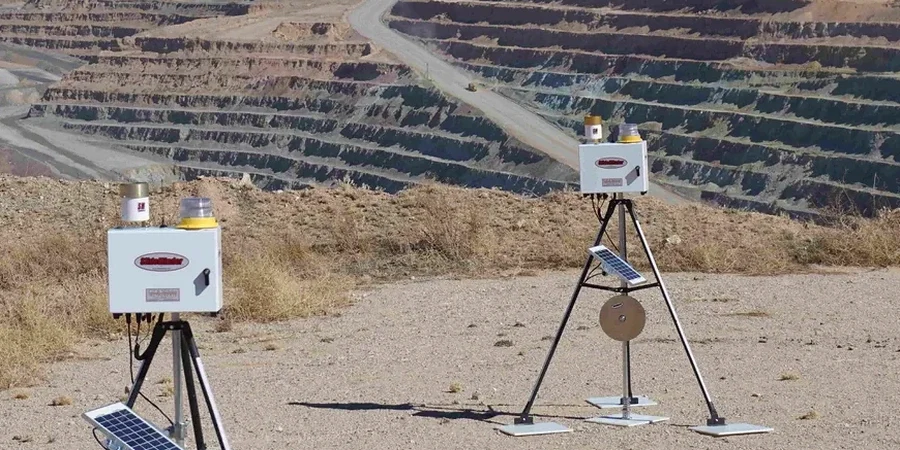
In Glasgow, the subsurface is rarely predictable. You hit stiff boulder clay in one corner of the site and soft alluvial silts fifty metres away. That's the legacy of the city's drumlin landscape, shaped by the last ice age and cut through by the River Clyde. It makes geotechnical excavation monitoring a non-negotiable part of any deep dig in the city centre. We see contractors surprised by groundwater perched in sand lenses inside the till, even in supposedly dry conditions. Our instrumentation programmes catch these conditions before they become site failures. A proper monitoring plan starts with the observational method defined in Eurocode 7 and adapts as the excavation deepens. For basement construction in the Merchant City, we typically combine inclinometers with load cells on temporary propping to track wall deflection in real time. The Clyde alluvium demands vigilance.
In Glasgow's boulder clay, pore pressure equalisation can take 72 hours. If your monitoring interval is 24 hours, you're already behind the failure mechanism.
Questions and answers
How much does geotechnical excavation monitoring cost for a typical Glasgow basement project?
For a commercial basement excavation in central Glasgow, monitoring programmes typically range from £750 to £1,900 per week depending on the number of instruments, reading frequency, and whether automated or manual data collection is required. A basic package with manual inclinometer and piezometer readings twice weekly sits at the lower end. Full ATS networks with 24/7 cloud reporting, multiple inclinometer strings, and load cells on every prop level push toward the upper figure. We provide a fixed-price proposal after reviewing the temporary works design and the ground investigation report.
What instruments are mandatory for a deep excavation in Glasgow's boulder clay?
There is no single mandatory list, but BS EN 1997-1 requires monitoring sufficient to verify the design assumptions. In Glasgow, we always recommend inclinometers in the retaining wall (one per wall panel on larger sites), vibrating wire piezometers at multiple depths behind and in front of the wall, and surface settlement markers on all adjacent structures. If the excavation is propped, load cells on each level of struts provide direct feedback on earth pressure development. The boulder clay's stiffness can mask progressive failure until it's too late, so wall deflection data is the primary safety indicator.
How quickly can you mobilise a monitoring team to a site in Glasgow?
For emergency response — such as unexpected wall movement or a burst water main near the excavation — we can have a senior technician on site in Glasgow within 4 hours. Standard mobilisation for a planned programme is 5 to 7 working days from instruction, which includes baseline readings, instrument calibration certificates, and installation of any new in-ground instrumentation. Faster turnaround is possible if boreholes for inclinometer casing are already pre-drilled.